



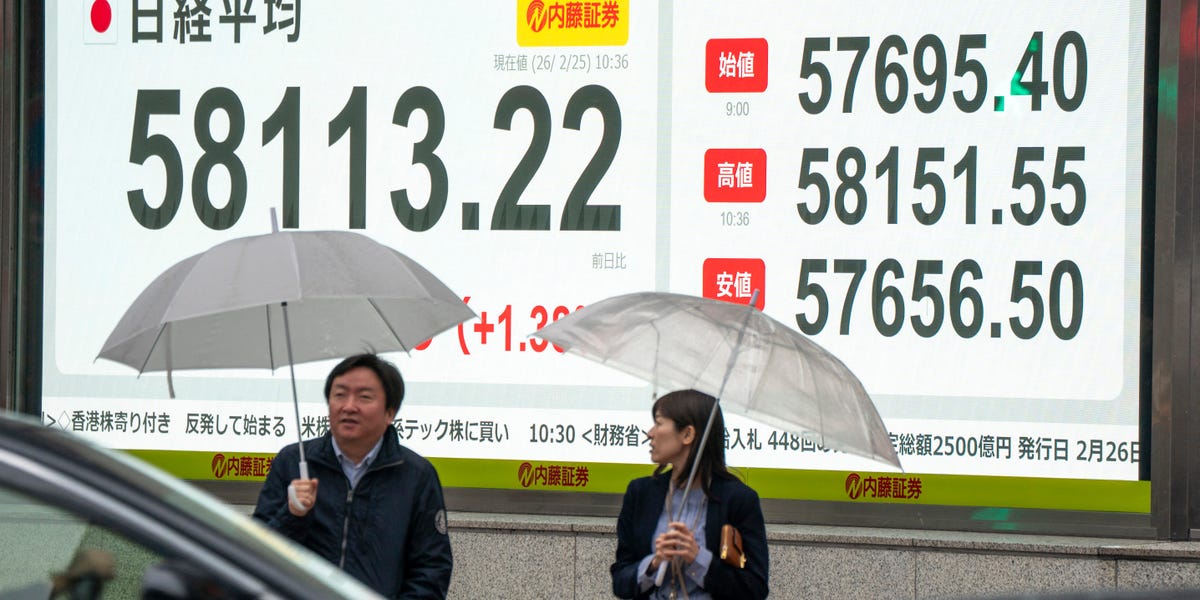
Japan’s stock market rally shows no signs of slowing down, according to Goldman Sachs strategists who believe the upward momentum that began in autumn 2022 still has room to run. The country’s benchmark Nikkei 225 index has surged 52% over the past 12 months and has been setting record highs since 2024, while the broader Topix index has climbed 41% over the same period and is up 12% year-to-date.
Bruce Kirk, Goldman Sachs’ chief Japan equity strategist, told the bank’s podcast published on Tuesday that investors remain in the upward phase of the current market cycle. Japanese equities have extended their gains following Prime Minister Sanae Takaichi’s landslide election victory earlier this month, which markets interpreted as a signal of continued political stability and pro-growth economic policies.
Foreign Investment Returns to Japanese Stocks
A key driver supporting the rally is the return of foreign capital to Japanese markets. According to Kirk, recent data showed 1.8 trillion yen in net buying during the week before the election, marking the second-highest weekly total on record. This follows a sharp 24% correction in the Topix index during the summer 2024 sell-off that temporarily rattled investor confidence.
However, foreign positioning in Japanese equities is not overextended, the strategist noted. Mutual funds remain underweight Japan, and foreign allocations have only recovered to levels last seen at the start of 2012, when former Prime Minister Shinzo Abe’s policy agenda first sparked meaningful gains in the market.
Critical Delivery Phase Ahead
Despite the optimistic outlook for Japan’s stock market, Goldman Sachs acknowledges significant challenges lie ahead. The rally’s next stage depends on what Kirk describes as the “delivery phase,” where both policymakers and corporate Japan must prove they can execute on the high expectations investors have built up over the past two years.
Additionally, alignment between top-down government pressure and bottom-up investor engagement with company management will be crucial. Kirk emphasized that if these forces work together effectively, the dynamic could create interesting opportunities moving forward for both foreign and domestic investors.
Corporate Profitability Remains Key Test
For the stock market rally to sustain itself over the long term, investors need concrete evidence of improving corporate profitability, according to the Goldman strategist. Return on equity has remained stagnant around 9% to 10%, despite the sharp rise in equity prices, Kirk said. Meanwhile, this disconnect between market performance and underlying corporate returns represents a critical challenge that companies must address.
In contrast to the price appreciation investors have enjoyed, fundamental business performance has lagged. Kirk identified ROE improvement as the essential ingredient for the rally’s next phase, suggesting that without meaningful progress on this metric, the market’s upward trajectory could face headwinds.
The sustainability of Japan’s equity rally will become clearer in coming months as corporate earnings reports reveal whether businesses can deliver the profitability improvements investors are anticipating. Market participants will closely monitor return on equity figures and management execution on promised reforms to determine if current valuations are justified.