



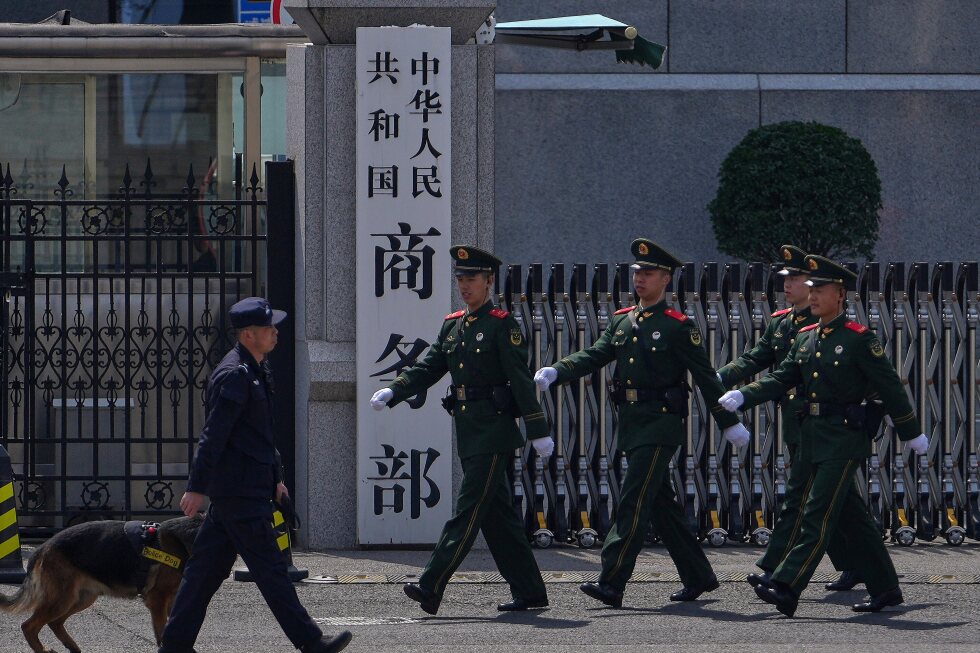
China has imposed export restrictions on 40 Japanese entities, citing concerns over Japan’s military expansion in a significant escalation of tensions between the two Asian powers. The Chinese Commerce Ministry announced Tuesday that 20 Japanese companies would face strict export controls on dual-use goods, while another 20 would be placed on a separate watchlist requiring additional documentation for Chinese imports. The China export restrictions target major industrial corporations including subsidiaries of Mitsubishi Heavy Industries, Kawasaki Heavy Industries, and Fujitsu.
The measures prohibit the affected companies from importing dual-use goods from China, which can serve both civilian and military purposes. According to the ministry’s statement, foreign organizations and individuals are also banned from providing China-originated dual-use items to the 20 entities on the primary control list, with all ongoing related activities required to cease immediately.
Watchlist Requires Additional Documentation
Companies placed on the secondary watchlist, including Subaru Corporation, Mitsubishi Materials Corporation, and the Institute of Science Tokyo, face different requirements. Chinese exporters must submit individual export license applications, risk assessment reports, and written pledges guaranteeing the dual-use items will not support Japan’s military operations. However, the Chinese Commerce Ministry emphasized that the restrictions target only a small number of Japanese entities and should not affect normal economic and trade exchanges between the two nations.
Beijing justified the China export restrictions as legitimate measures aimed at curbing what it characterizes as Japan’s remilitarization and nuclear ambitions. The ministry stated that honest and law-abiding Japanese entities have nothing to worry about, though specific details remain unclear, including whether the restrictions encompass rare earths trading.
Japan Issues Formal Protest
Tokyo responded swiftly with a formal protest delivered to China’s Deputy Chief of Mission to Japan. Masaaki Kanai, head of the Japanese Foreign Ministry’s Asian and Oceanian Affairs Bureau, called the restrictions “absolutely unacceptable,” noting they solely target Japan and differ significantly from international practices.
Deputy Chief Cabinet Secretary Kei Sato condemned the measures during a Tuesday briefing, stating they would “never be tolerated” and demanding China lift the controls. Additionally, Sato indicated that Japan would examine the contents of the restrictions carefully before determining appropriate responses.
Limited Impact Expected by Some Targeted Companies
Meanwhile, several companies contacted by The Associated Press indicated the restrictions might have minimal immediate impact on their operations. Representatives from industrial equipment supplier Yashima Denki Co. and chemical manufacturer NOF Corp, both on the watchlist, reported limited trade relationships with China. Most other affected companies declined to provide immediate comments.
The diplomatic friction stems from remarks made in November by Japanese Prime Minister Sanae Takaichi, who implied Japan could intervene militarily if China used force against Taiwan. China regards Taiwan as a breakaway province to be annexed by force if necessary and has repeatedly criticized Tokyo over Takaichi’s comments. In contrast to China’s position, Taiwan operates as an independent democracy with its own government and military.
The timing of the Chinese export control measures follows Takaichi’s party securing a landslide victory in parliamentary elections earlier this month. The electoral success is expected to enable a significant conservative shift in Japan’s security and immigration policies, potentially further straining Sino-Japanese relations.
Japanese officials are currently examining the full scope of the restrictions to determine their potential economic impact and formulate an official response strategy. The extent to which these measures will affect bilateral trade relations remains uncertain as both governments assess next steps.