



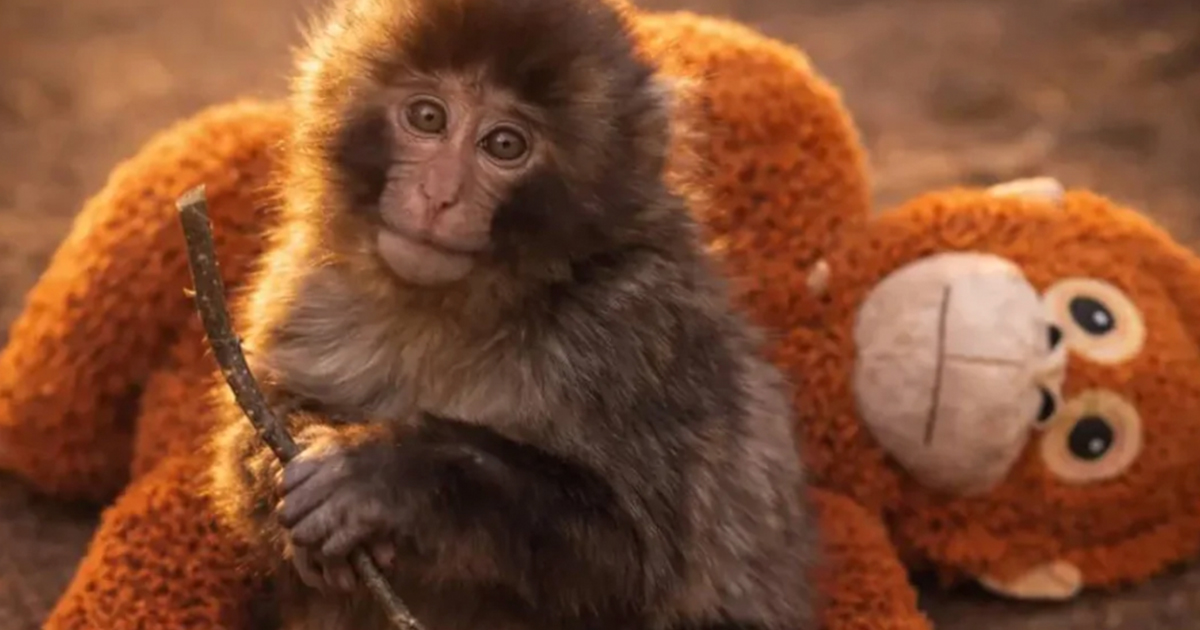
Punch the monkey, a seven-month-old Japanese macaque at Ichikawa City Zoo near Tokyo, is finally finding acceptance among his troop after being rejected by his mother at birth. The young primate, who captured hearts worldwide by clinging to an emotional-support orangutan plush toy, is now being protected by adult members of his clan and has reportedly been adopted by a female monkey who grooms and cares for him.
Recent videos shared on social media show two adult monkeys actively shielding Punch from aggression by other troop members. Additionally, footage reveals the young macaque spending less time with his beloved plushie and more time interacting with his fellow primates, signaling significant progress in his social integration.
Understanding Punch the Monkey’s Difficult Start
Maternal rejection in Japanese macaques is extremely rare, according to Professor Jo Setchell, a primatologist at Durham University. She explained that a baby monkey would typically receive protection and behavioral guidance from his mother, advantages that Punch the monkey never had. Without this crucial maternal support, Punch struggled to learn appropriate social responses within the troop hierarchy.
The absence of maternal care left Punch vulnerable to rough handling by other macaques. Dr. Emily Bethell, associate professor in primate cognition and welfare at Liverpool John Moores University, noted that macaques are highly social primates with common interest in youngsters. However, an abandoned infant like Punch can become the subject of conflict as multiple monkeys compete to handle him, sometimes resulting in rough treatment.
Social Integration and Protective Relationships
The young macaque initially relied on his plush toy for comfort while navigating the complex social dynamics of his troop. Zoo caretakers stepped in to raise Punch after his mother’s rejection, but integration with his own species remained essential for his long-term wellbeing.
Meanwhile, his situation has improved dramatically in recent weeks. The adoption by a female monkey represents a significant milestone, as she provides the grooming and care typically offered by a biological mother. This relationship may help Punch acquire the social skills he missed during his earliest weeks of life.
Global Support and Public Interest
Videos documenting Punch’s journey have generated enormous online engagement, with supporters expressing relief at his progress. One viewer commented that the updates made their day and that they had been worried about Punch, while another stated the young monkey had captured their heart completely.
In contrast to his early struggles, Punch now appears to be transitioning from the fringes to becoming an accepted member of his troop. The increased time spent with other monkeys rather than his plushie indicates growing confidence and social competence. Large crowds have reportedly gathered at the zoo to witness his progress firsthand, demonstrating the widespread interest in his story.
Expert Perspectives on Primate Social Behavior
According to primate behavior experts, the challenges faced by Punch the monkey stem directly from missing critical early socialization. Young macaques typically learn proper behavioral responses through observation and interaction with their mothers. Without this foundation, Punch entered the troop at a disadvantage, unable to interpret or respond appropriately to social cues from other monkeys.
However, the recent protective behavior from adult troop members suggests that Punch is gradually being incorporated into the social fabric of his clan. The presence of multiple caregivers may compensate for the absence of maternal guidance, though experts have not confirmed whether this arrangement will fully replicate typical developmental outcomes.
Zoo officials continue to monitor Punch’s integration with the troop, though specific timelines or benchmarks for his progress have not been publicly disclosed. The ongoing positive interactions suggest he may continue gaining acceptance and developing normal social behaviors as he matures.