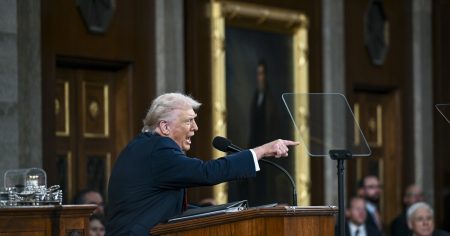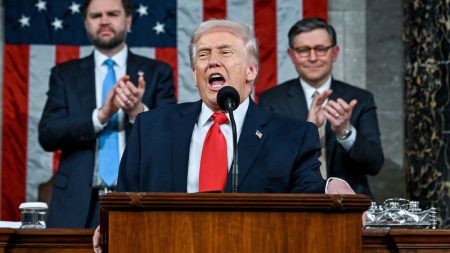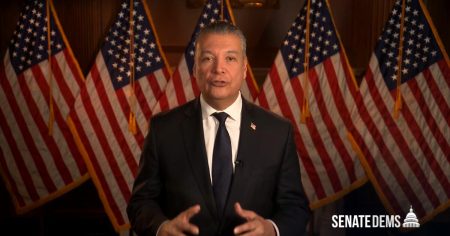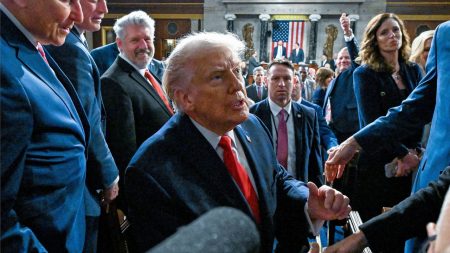




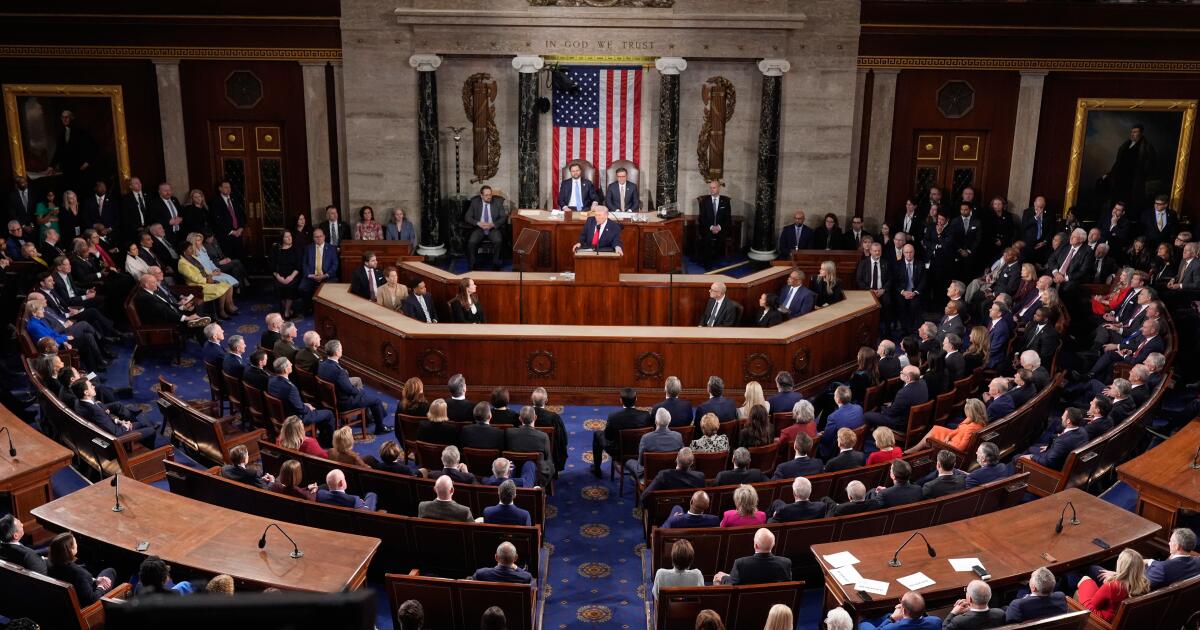
President Trump delivered the longest State of the Union address in American history on Tuesday night, speaking for approximately 100 minutes and surpassing the previous record held by President Clinton. The extended State of the Union address covered a wide array of domestic and international issues while also including several ceremonial moments honoring notable Americans.
During the marathon speech, Trump discussed various policy topics and highlighted what he described as his accomplishments. He also presented the nation’s highest honors to several individuals, including a pilot involved in the capture of Venezuelan President Nicolás Maduro, a 100-year-old Korean War veteran, and a 32-year-old goalie from the gold-medal-winning Olympic men’s hockey team, according to reports.
Breaking the State of the Union Address Record
The previous record for the longest State of the Union speech belonged to President Clinton, who was known for his lengthy and detailed presentations. Clinton spoke for nearly 90 minutes during his final State of the Union in 2000, a record that stood for more than two decades.
However, Trump’s address extended well beyond that mark, lasting over an hour and a half. The president’s verbose delivery style and broad topic coverage contributed to the historic length of the address.
Constitutional Mandate and Modern Evolution
The State of the Union address is mandated by the Constitution, which requires the president to inform Congress about the state of the nation. Over the years, this constitutional requirement has evolved into a major televised event that allows presidents to speak directly to American residents.
Additionally, the address has become a platform for presidents to claim legislative victories and outline future policy objectives. The speech serves both a constitutional function and a political purpose in modern American governance.
Historical Context of Presidential Addresses
The State of the Union has transformed significantly since its early days. Just over a century ago, Presidents Harding and Coolidge had their addresses broadcast on radio, marking a technological milestone in presidential communication.
In 1947, President Truman’s address became the first to be televised. As television viewership expanded throughout the latter half of the 20th century, the annual presidential speech gained increasing importance in American political discourse.
Notable Moments and Controversies
The growing prominence of State of the Union addresses has led to several controversial and memorable moments. In 2009, Rep. Joe Wilson (R-S.C.) interrupted President Obama’s address to Congress by shouting “You lie!” during a discussion of healthcare policy.
Meanwhile, then-House Speaker Nancy Pelosi (D-San Francisco) created a viral sensation in 2020 when she visibly tore apart her copy of Trump’s speech text immediately following his delivery. Such incidents demonstrate how the address has become a focal point for political theater and partisan tensions.
On Tuesday night, Rep. Al Green, a Democrat from Louisiana, was escorted from the chamber after displaying a small sign that read “BLACK PEOPLE AREN’T APES,” according to reports. The incident added another layer of controversy to an already historic evening.
Congressional leaders and political analysts will likely continue discussing the implications of the record-length address in the coming days. It remains unclear whether future presidents will attempt to match or exceed this new benchmark for State of the Union speeches.